
Corrugated pipes are unsung heroes of modern infrastructure,quietly supporting critical systems from municipal stormwater management and agricultural irrigation to underground utility conduits and residential drainage.Choosing the right corrugated pipe is not a trivial decision—selecting a mismatched product can lead to costly failures like underground leaks,persistent clogs,structural collapse under traffic,or premature replacement,draining time,money,and causing environmental disruption.This guide breaks down the key factors to consider when selecting a corrugated pipe,ensuring your project’s longevity,functionality,and cost efficiency.
First,align the pipe type with its primary application.Corrugated pipes are designed for distinct use cases,so matching their core traits to your project’s needs is foundational.For example,municipal storm drainage pipes running under roads or parking lots require heavy-duty strength to withstand vehicular loads,while residential French drains for yard water runoff prioritize flexibility and ease of installation.Agricultural irrigation systems need UV-resistant pipes if installed above ground and chemical resistance to fertilizers and soil amendments.For electrical or telecommunication conduits,insulated,fire-retardant options that meet safety codes are non-negotiable.Additionally,choose perforated corrugated pipes for drainage zones where groundwater infiltration is needed,and solid pipes for pressurized or non-infiltrating line work.
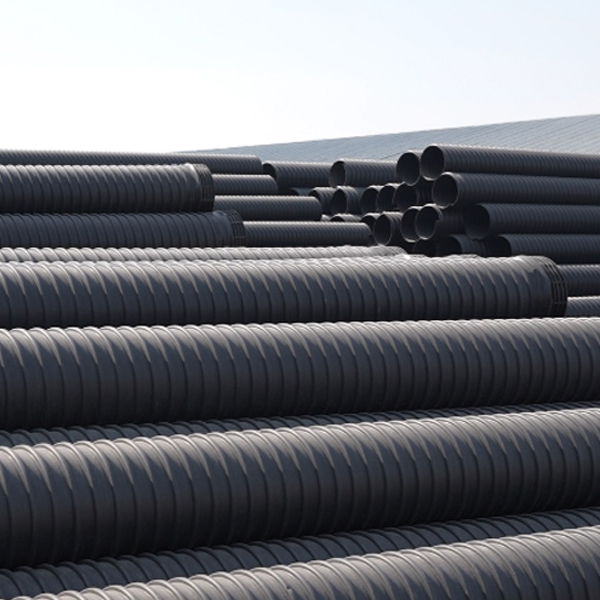
Next,select the right material,as it defines performance,lifespan,and cost.The three most common materials are high-density polyethylene(HDPE),polyvinyl chloride(PVC),and corrugated concrete.HDPE is the most versatile option:it is flexible,lightweight,highly resistant to corrosion from chemicals,soils,and(when stabilized)UV light,with a lifespan of 50 to 100 years.It is ideal for underground drainage,irrigation,and utility conduits,balancing durability and ease of installation.PVC,by contrast,is rigid,has a lower upfront cost,and resists most acids and bases,making it a good fit for short,non-critical lines.However,it is prone to brittleness in extreme cold and degrades quickly when exposed to sunlight,limiting its use for long-term or above-ground projects.Corrugated concrete pipes offer extreme ring stiffness,suited for deep municipal installations or heavy industrial sites with maximum soil pressure,but they are heavy,difficult to transport and install,and prone to cracking under flexing.
Ring stiffness(SN rating)is a critical metric for matching the pipe to external pressure loads.SN measures a pipe’s ability to resist deformation from surrounding soil,traffic,or other external forces,and is rated in kilonewtons per square meter(kN/m²).Common SN ratings include SN4(light load,ideal for residential yards,shallow drainage),SN8(medium load,for driveways and low-traffic roads),and SN12+(heavy load,for highways,commercial parking lots,and deep underground installations).Failing to select the right SN rating is a top cause of pipe collapse:a pipe designed for light loads installed under a busy road will buckle under vehicle weight,leading to costly excavations and repairs.To choose the correct SN,calculate expected external loads based on burial depth,soil compaction,and any above-ground traffic.
Functional features further tailor the pipe to your needs.For flow efficiency,prioritize pipes with smooth inner liners—corrugated pipes with rough inner walls create more friction,slowing water flow and increasing the risk of clogs.If the pipe will be exposed to sunlight(e.g.,above-ground irrigation or temporary construction drainage),confirm it is made with UV-stabilized material;unprotected HDPE or PVC will break down within a few years of sun exposure.For electrical or telecommunication conduits,look for pipes that meet local safety standards for flame resistance,low smoke emission,and electrical insulation,to avoid fire hazards or code violations.For projects near industrial sites or agricultural areas with harsh chemicals,verify the pipe’s material is resistant to specific substances(e.g.,fertilizers,petroleum byproducts)to prevent premature degradation.
Installation practicality and long-term value also matter.Flexible HDPE pipes bend easily around obstacles like trees or existing underground lines,reducing the need for multiple joints and minimizing leak points during installation.Lighter pipes(HDPE,PVC)lower transport and labor costs,especially for large-scale projects.When comparing costs,look beyond the upfront price:while PVC is cheaper initially,its shorter lifespan(15–25 years)and vulnerability to UV damage make it less cost-effective for long-term projects.Concrete pipes have high upfront and installation costs,so they are only justified for heavy industrial or municipal projects requiring maximum strength.
Service Hotline: 171-7172-8888
Wuxing Village, Minzhu Town, Daowai District, Harbin City, Heilongjiang
Province, China

Scan wechat
This website uses cookies to ensure you get the best experience on our website.

 Pусский
 日本語
日本語 한국어
한국어 中文
中文



 Phone
Phone
Comment
(0)